
A strong El Niño winter brings band openings, real reasons to train, and plenty of ways for weather to knock a station off the air. A look at both sides from the club's November program.
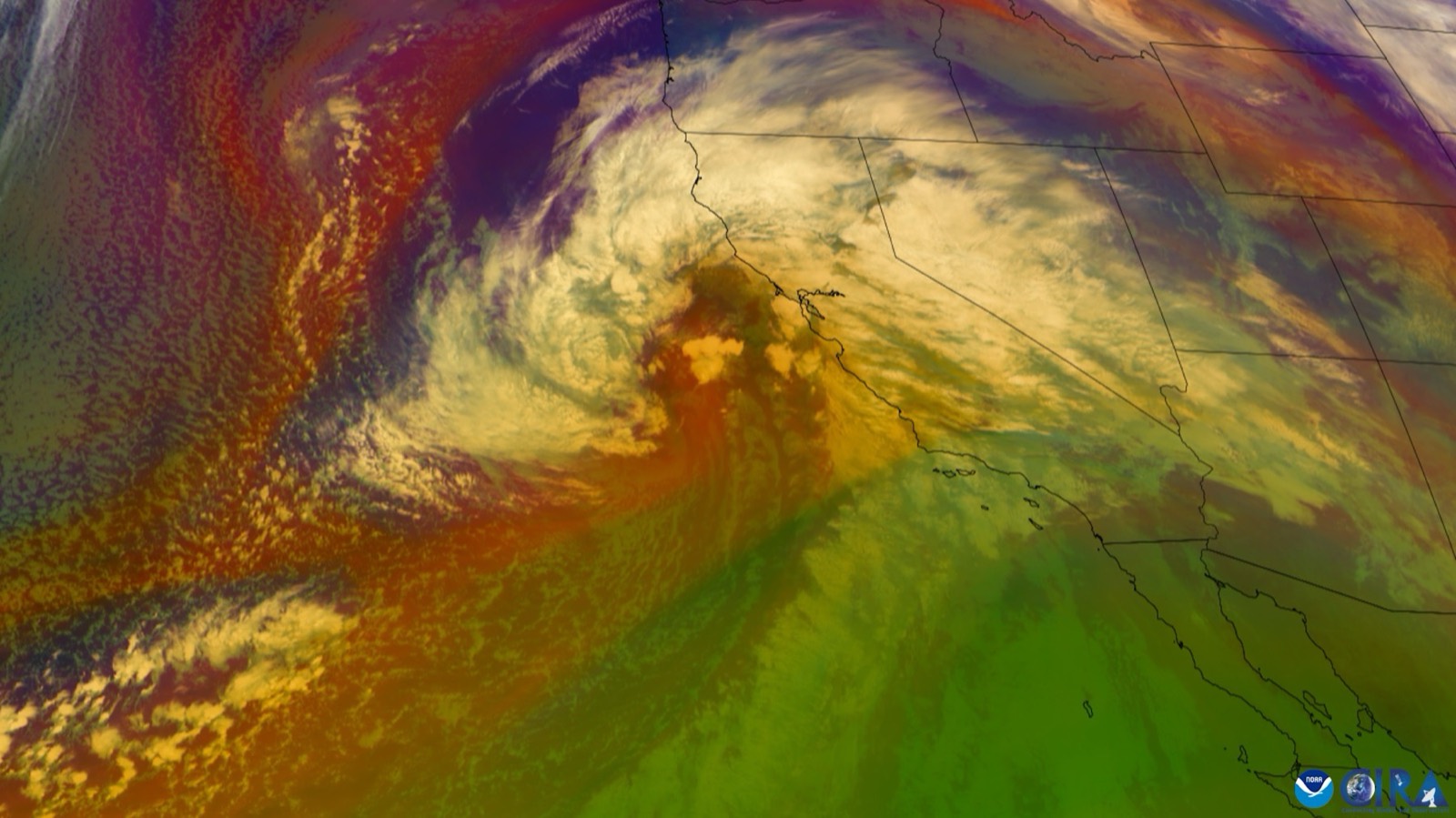
An atmospheric river aims at California, February 4, 2024. Storms like this are what a strong El Niño winter can deliver. Image: NOAA / CSU-CIRA GOES image.
The timing could not have been better. On the afternoon of the club's November 12 meeting, NOAA released its monthly El Niño update, and the first storm of the season was due that night. The evening's speaker, Dave, opened with a warning: this was not a weather forecast. For that, he said, watch the TV meteorologists. The question for the night was narrower and more useful to hams. When the weather turns, what happens to our stations, our signals and our community, and which of those changes help us?
Where things stand
NOAA's Climate Prediction Center kept its El Niño Advisory in place on November 12 and said El Niño continues to strengthen. The key ocean reading in the central Pacific, called Niño-3.4, rose to 2.5 °C above normal, up from about 2.1 °C a month earlier.
The NOAA numbers, a month apart
- Niño-3.4 ocean reading, above normal: about +2.1 °C on Oct 8, now +2.5 °C on Nov 12.
- Chance of a strong-to-very-strong event through Jan–Mar: better than 83% on Oct 8, now better than 79%.
- Chance it beats every El Niño since 1950: about 70% on Oct 8, now about 60%.
- Next NOAA update: December 10.
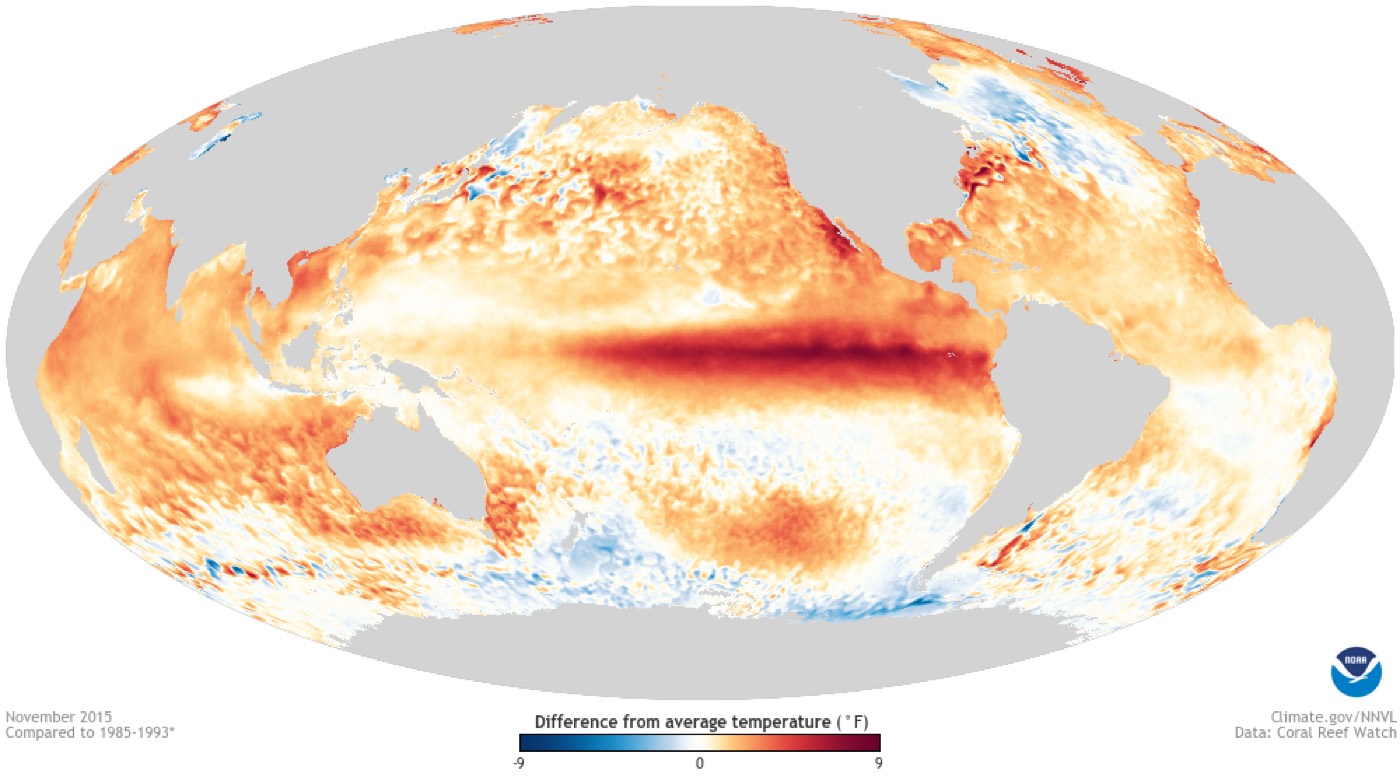
What a strong El Niño looks like from above: the band of unusually warm water along the equator in November 2015. The talk used it as the example. Image: NOAA Climate.gov.
The ocean is warmer, but forecasters are a little less certain of a record. "Still better than 50 percent," Dave noted. NOAA's standing caution applies: a stronger El Niño makes the usual impacts more likely, not certain.
History shows the range. San Francisco normally gets about 23 inches of rain a season. The strong El Niño of 1982–83 brought about 38 inches, and 1997–98 about 47, roughly double. But 2015–16, also rated strong, turned out to be close to a normal year here. Where the warm water sits and how the jet stream sets up both matter.
Dave knows the bad years firsthand. He showed before-and-after photos of a hillside off Crestmoor that gave way in the 1998 storms, leaving several homes red-tagged. The city later rebuilt the slope with drains and geogrid. His family now lives in one of those homes. "If it really comes as bad as '97–'98," he said, "it could be miserable."
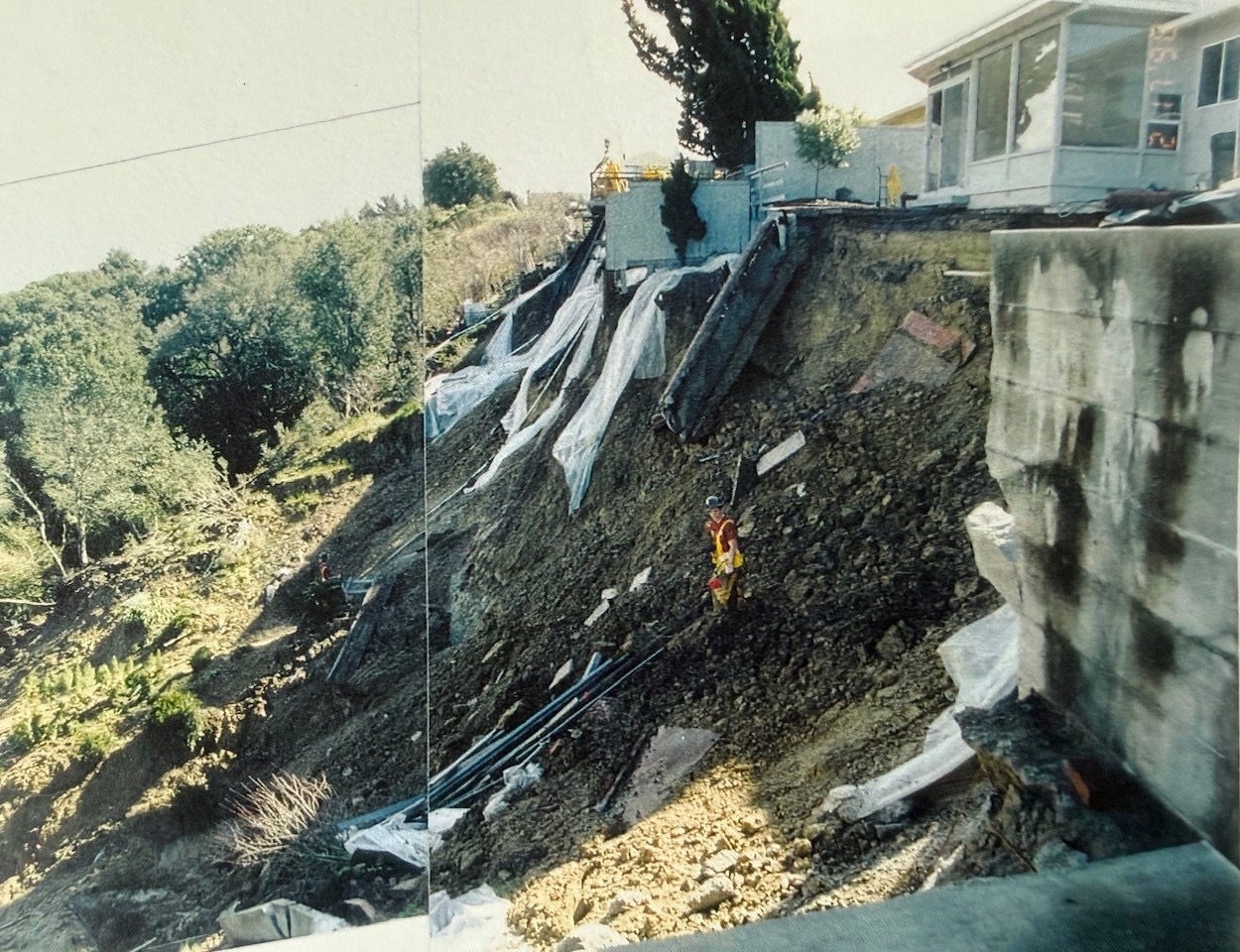
February 1, 1998: the hillside gave way below homes on Crestmoor Drive in San Bruno. This is how serious a strong El Niño winter can get here. A slide like this cuts roads, power and phone lines at the moment radio matters most. Image: Photo shown at the talk.
Two kinds of weather
Radio has to deal with two different skies. The troposphere is the bottom layer, about 7 miles thick at our latitude, a bit higher at the equator and lower at the poles. All our everyday weather happens there: clouds, rain, fog, wind and temperature inversions. It matters most for VHF, UHF and microwaves.
Far above it, starting about 35 miles up, the sun's ultraviolet and X-rays create the ionosphere, which bends HF signals back to Earth. Its layers behave very differently by day and night:
- D layer (about 35–55 miles): the "sunshine layer." It exists only in daylight and absorbs 160 and 80 meters, which is why those bands are quiet at noon.
- E layer (about 55–90 miles): home of sporadic E.
- F1 and F2 (about 90 miles and up): the main HF skip layers. By day they open 20 through 10 meters; at night they merge into one weaker F layer and the high bands usually close.
Within an hour or two of sunset the D layer disappears, and the low bands come alive. Winter helps twice: nights are long, and there is far less thunderstorm static around the world. That is good news for the club's weekly 40-meter net and for anyone chasing DX on 40, 80 or 160.
The upside
How far VHF really goes
Radio waves bend gently downward in the lower atmosphere, so the radio horizon sits a little beyond the visual one. Dave shared a rule of thumb:
radio horizon (miles) ≈ 1.41 × √(antenna height in feet)
For the antennas on the meeting building, about 50 feet up, that works out to roughly 10 miles. A station 500 feet up the hill reaches about 32 miles. San Bruno Mountain's summit, at about 1,319 feet, gives roughly 51 miles, which is why stations in the foothills sometimes make the club repeater. One point to add: this is the horizon for one antenna. For a contact between two stations, add both stations' horizons together.
Obstacles do not always stop a signal, either. Knife-edge diffraction bends signals over sharp edges like rooftops, and reflections can do the rest. Dave once worked a station in Brisbane he could not possibly see by bouncing both signals off a ship anchored in the Bay.
Ducting between storms
The best VHF days of an El Niño winter may be the calm ones. After a storm, high pressure can set up a temperature inversion: warm, dry air sitting on top of cool, moist air. 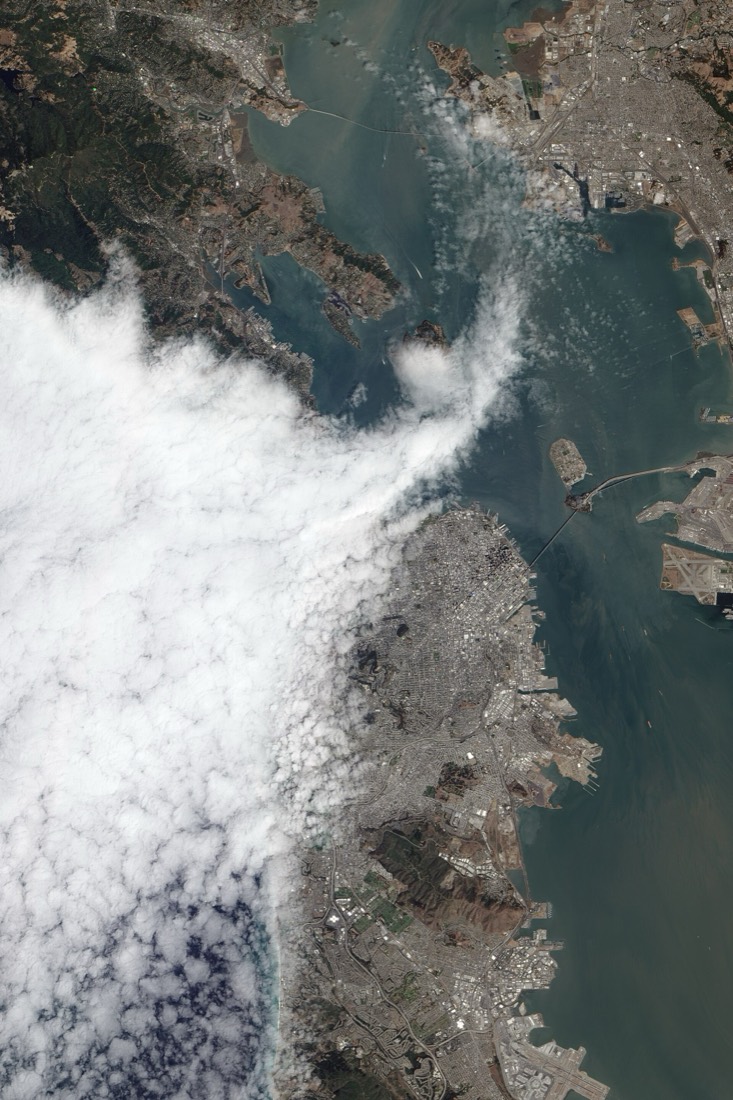 That inversion traps VHF and UHF signals in a duct and carries them hundreds of miles. That's when 2 meters reaches Los Angeles. On rare days, ducting has carried 2-meter contacts all the way between California and Hawaii, about 2,500 miles. Ducting is a VHF and UHF effect; it does nothing for HF.
Our marine layer is a built-in duct, too. Good nights to try simplex include 146.52 MHz FM and 144.200 MHz SSB, using horizontal antennas for SSB and CW and vertical for FM. The catch: distant repeaters on our frequencies can come through and key up ours, and a strong far-away station can confuse an emergency net. The fix is CTCSS or DCS tones, and knowing your local repeater IDs. Free tropo forecast maps are at dxinfocentre.com.
Our marine layer, seen from space. The cool, moist air under warmer air above is the same setup that ducts VHF and UHF signals. Image: NASA Earth Observatory.
Meteors, sporadic E and aurora
Winter brings other short-lived openings. 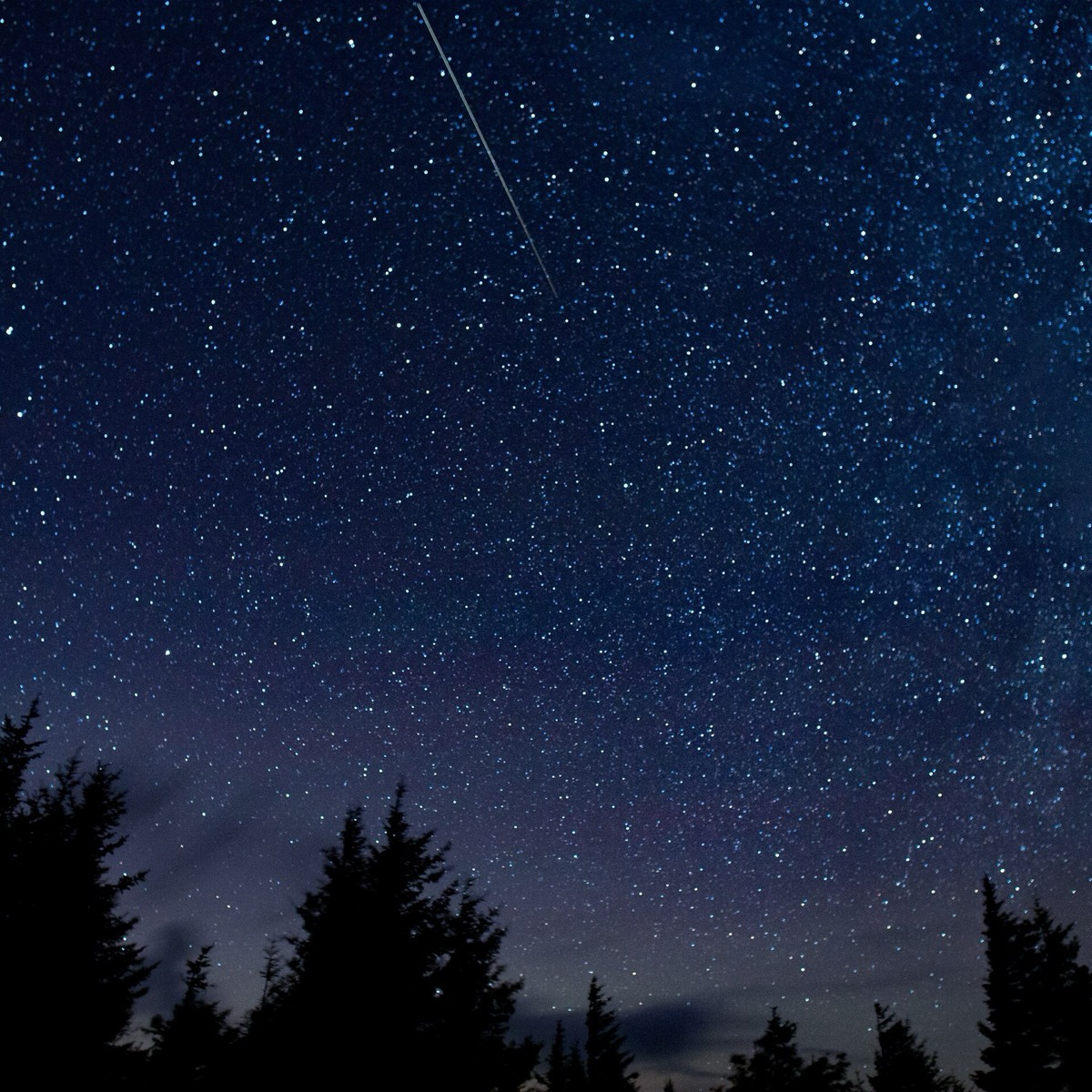 Meteor trails briefly ionize the air, and the Geminids (peaking around December 13–14) and Quadrantids (around January 3–4) are the two big showers ahead. Meteor scatter works best on 6 meters using the MSK144 mode in the free WSJT-X software. Sporadic E, dense patches in the E layer, can open 10 and 6 meters, and sometimes 2 meters, for contacts of 500 to 1,400 miles; its main season is summer, with a smaller peak in December and January. And during big geomagnetic storms, VHF signals can bounce off the aurora with a raspy sound. That is rare this far south, but Californians saw the aurora in May 2024. Six-meter operators can listen for the band's worldwide network of beacons to know when it is open.
A meteor streaks across the night sky. Each trail ionizes the air for a moment, long enough for a short burst of 6-meter signals. Image: NASA / Bill Ingalls.
HF: the sun matters, not El Niño
Solar Cycle 25 peaked around October 2024, with a smoothed sunspot number of about 161. It is now declining, so 10 and 12 meters open less often, mostly around midday. The sun still has punch: NASA recorded an X4 flare in February 2026, and big solar storms often come in the years after a peak. Members remembered the cycle's best days, including a first-ever 10-meter contact to Arizona made at noon during a firehouse open house.
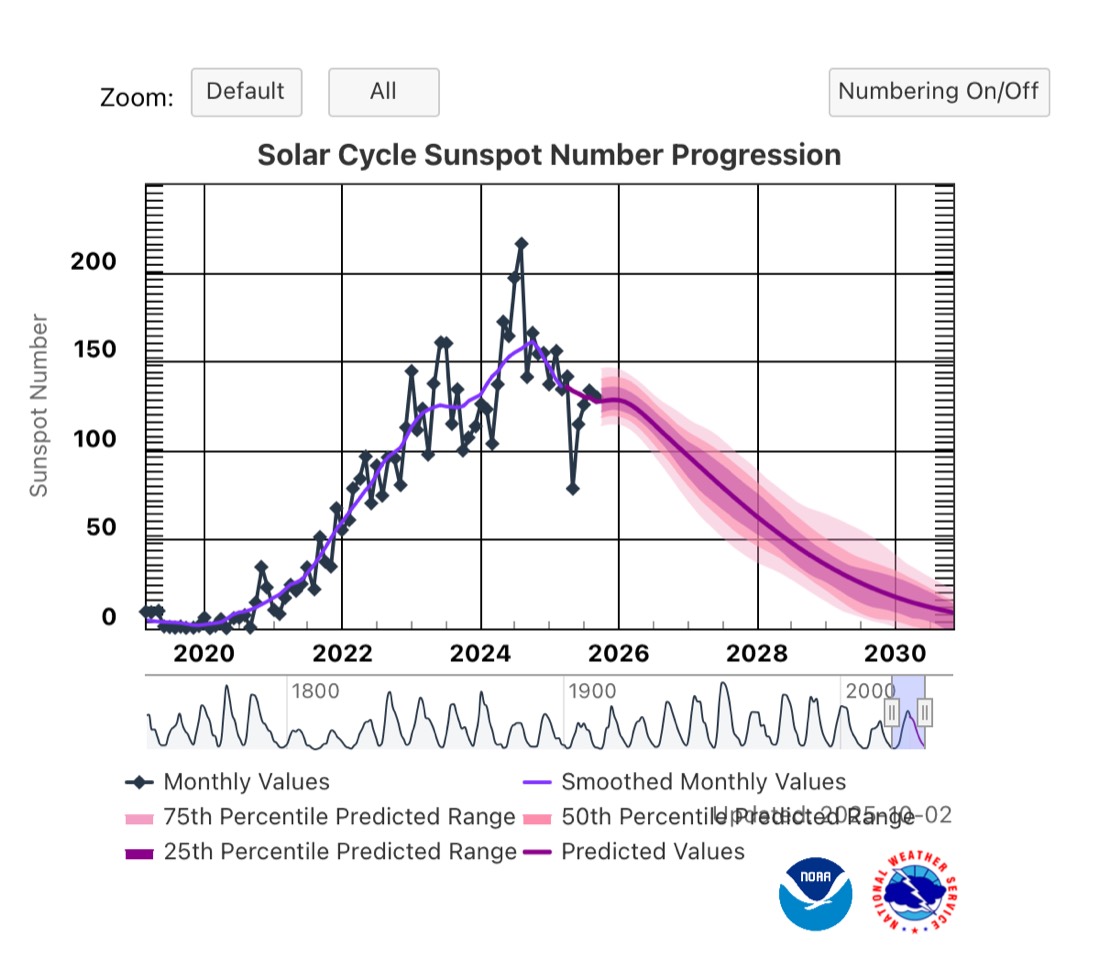
Solar Cycle 25: up to a peak in late 2024, then down toward 2030. The higher HF bands follow the sunspots, not El Niño. Image: NOAA Space Weather Prediction Center, 2025 snapshot.
On El Niño and HF, the answer is simple: researchers find only faint traces of it in the upper atmosphere, nothing you could forecast with.
Unless El Niño takes down your power or your antenna, it won't change your HF.
More chances to serve
The biggest upside may be practice. Every storm watch is a free drill:
- SKYWARN: the National Weather Service Bay Area office trains volunteer spotters to report rain, wind, flooding and damage. The class is free.
- Nets: the club's weekly net draws about a dozen check-ins, and Dave wants more. The club also needs more members willing to try net control. "It's not that hard," he said. "We can all do it."
- ARES: real activations are more likely in a wet winter. RACES requires certification by a civil defense agency, and Dave's view is that most local volunteers are better served through ARES.
- The EOC: after meeting with the city's fire and police chiefs, Dave said the club needs more training before it can fully staff the San Bruno EOC radio room. He has drafted an emergency report intake script, a step-by-step form for taking reports and passing them to decision makers, and will review it with city emergency staff.
He also mentioned that South San Francisco has used trained volunteers to stand by downed power lines until PG&E arrives, freeing fire crews. Something similar could come up in San Bruno.
The downside
Noise, rain and wet trees
Storms are noisy. Each lightning strike is a burst of radio noise that can travel hundreds of miles on the low bands, and storm fronts bring static crashes even when the lightning is far away. Charged rain or hail hitting an antenna makes a steady hiss; a DC path to ground on the antenna helps bleed it off. Multipath causes "picket fencing," the rapid flutter on mobile signals as you drive past buildings and hills. Digital modes like FT8 and Winlink, and FM on VHF and UHF, get through noise far better than SSB voice.
Rain itself barely affects HF, 6 meters, 2 meters or 70 cm, because raindrops are tiny next to those wavelengths. Wet trees are another matter: soaked leaves absorb VHF and UHF signals. At microwave frequencies, such as the 5.8 GHz links in the AREDN mesh network, wavelengths shrink toward raindrop size, and heavy rain measurably shortens range. That's called rain fade.
Lightning
The Bay Area sees far less lightning than the Midwest, but members remember August 2020, when a rare dry-lightning siege lit up the region and sparked the wildfires whose smoke later turned Bay Area skies orange. Dave's own reminder came years ago, when lightning struck a pole beside his Burlingame photo studio and fried the business phone system, surge protector and all.
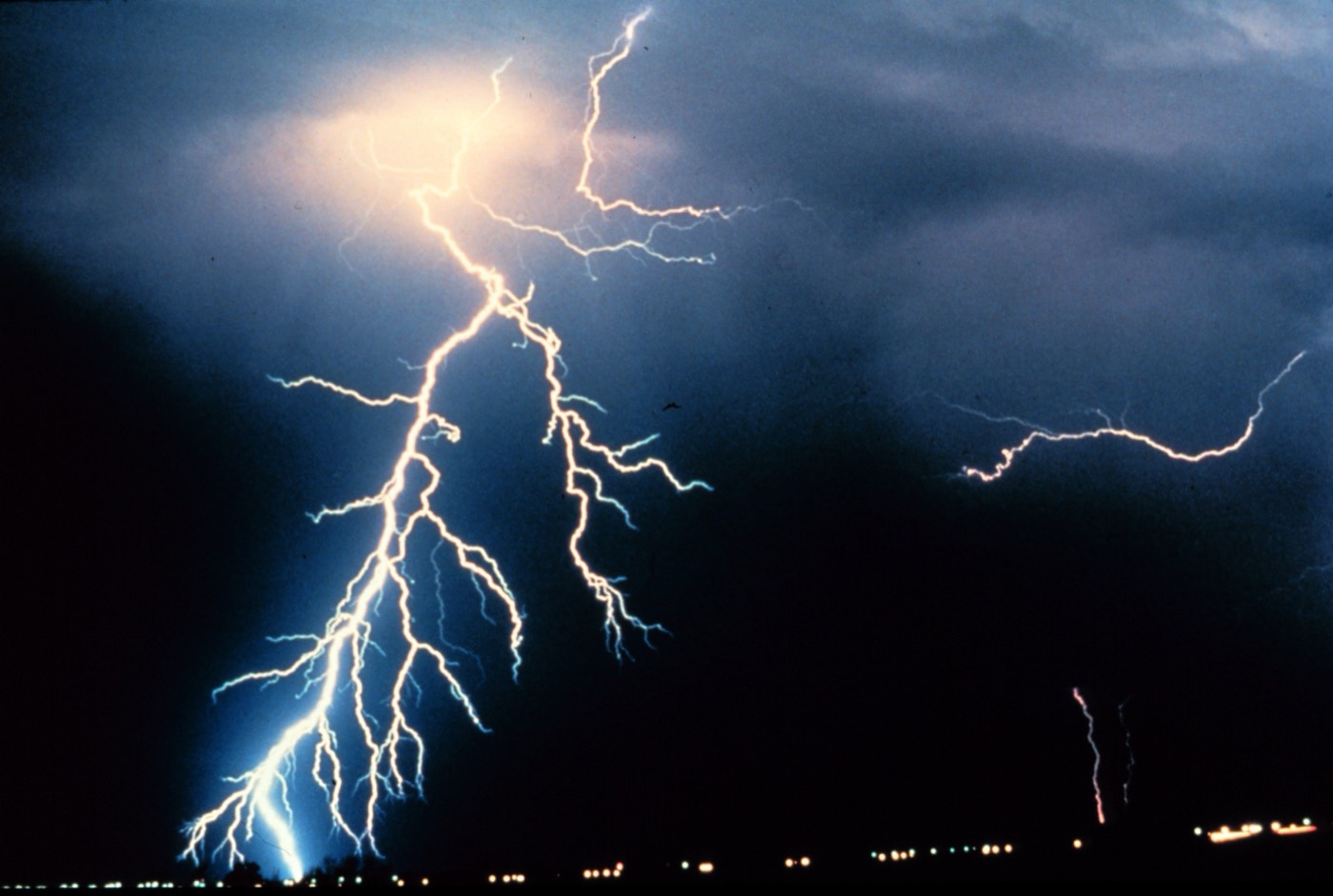
Each strike is a burst of radio noise that can be heard hundreds of miles away on the low bands, and a direct hit can destroy a station. Image: NOAA Photo Library, C. Clark.
Lightning protection, in five steps
- Disconnect feed lines and rotator cables when storms are near, or use a grounded switch.
- Single-point ground: bring all coax and control lines in at one grounded entry panel with arrestors.
- Bond everything: tie all ground rods, the electrical service ground and the station together.
- Short and straight: keep ground wires short and direct, with no sharp bends.
- Follow the code: local electrical codes, including NEC Article 810, set the rules.
When thunder roars, go indoors, and disconnect. No contact is worth a strike.
Wind and water
Wind stresses masts, guy wires and rotators, and tree-supported wire antennas snap when limbs come down. Check turnbuckles and guy anchors now. Water is quieter but just as destructive: it gets into connectors and wicks down the coax, and the first sign is SWR that creeps up or jumps around. Wrap outdoor connectors with tape, then a layer of self-sealing silicone tape, then tape again. Keep every antenna far enough from power lines that if it falls, no part comes within 10 feet of them. And do your antenna work while it's dry. Never climb in wind or rain, or alone.
When the power goes out
Assume it will. When a main feeder line came down near Madison and Princeton in San Bruno, Dave's household went three and a half days without power. Outages take down more than lights: internet, Wi-Fi and phone chargers go too, and even Starlink needs power. Repeaters run on batteries for a while, then go quiet. During PG&E's wind-related shutoffs, many cell sites lasted only about a day on backup power, which is exactly when people turn to hams.
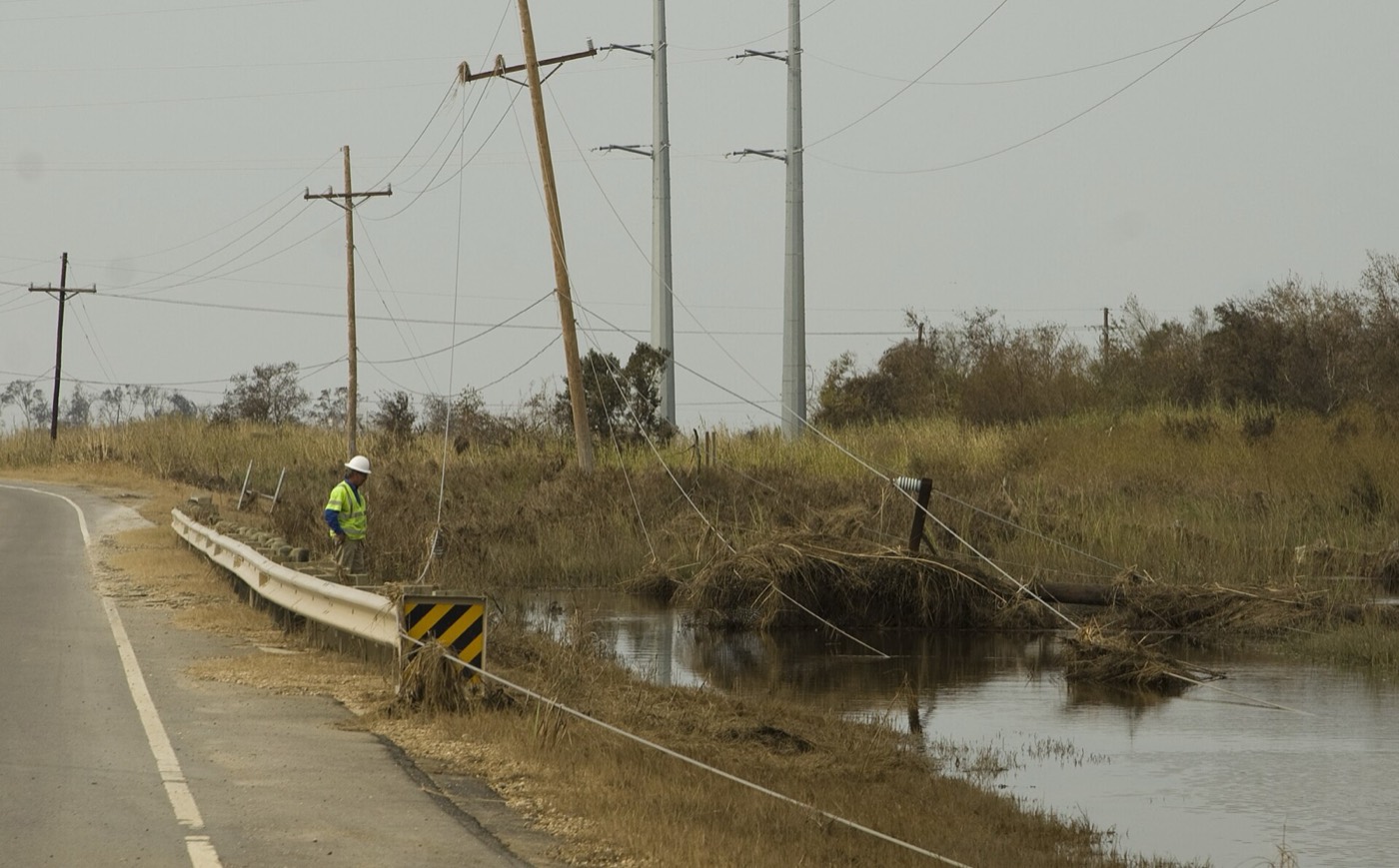
Crews can take days to restore power after a big storm. Plan for your station to run on its own for 24 to 72 hours. Image: FEMA / Liz Roll.
The battery math is simple. Hours of run time are roughly the battery's amp-hour rating divided by the average current draw: a 100 Ah battery running a 4 A average load lasts about 25 hours. With lead-acid, plan on using only about half the rated capacity. Batteries also lose charge sitting on the shelf; Dave found his own spares needed topping up every couple of months. Aim to keep your station running for 24 to 72 hours.
Roads closed, repeaters down
Repeaters fail, and roads close. Dave reminded members of December 2021, when a married couple died in a car trapped in the flooded underpass on East Hillcrest Boulevard beneath the Caltrain tracks in Millbrae. The National Weather Service says six inches of moving water can knock a person down, and about a foot can carry away most cars. Turn around, don't drown.
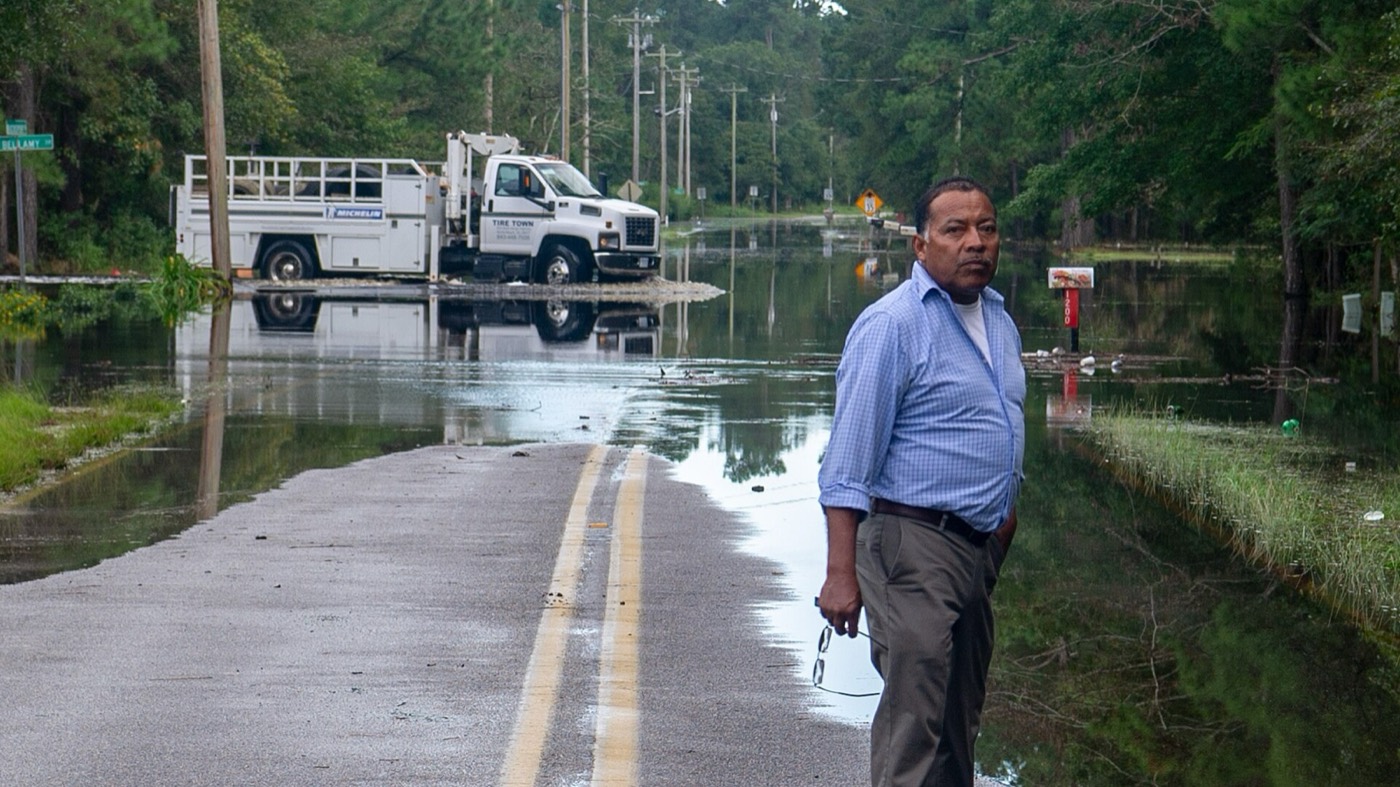
Flooded roads can cut off the route to the EOC, or to a repeater site that needs repairs. Image: U.S. National Guard.
Have a plan B. Agree on simplex frequencies now, test who can hear whom from home, and map who can relay for whom, with members on high ground relaying for those in the valleys. The Monday-night net already tests simplex after the repeater portion. Know two routes to the EOC, and keep a go-kit in the car.
Getting to the EOC may not be realistic in every emergency. Dave noted that the city's CERT teams hold 56 county-issued FRS/GMRS radios. But picking them up at the fire station is a long shot if roads are cracked, flooded or blocked by trees, and the radios' real range has not been tested. His view, which he has shared with city emergency staff: in a major event, most hams will do the most good operating from near home, with a few close enough to the EOC to help there.
The wildcard
Imagine a 1998-style storm and a solar storm at the same time. Solar flares can black out daytime HF on the sunlit side of Earth for minutes to hours, with no warning. Geomagnetic storms come with one to three days' notice and can disturb HF for a day or more, including the short-range NVIS signals used for regional emergency nets. If HF goes dead during an activation, check NOAA's Space Weather Prediction Center at swpc.noaa.gov, then move traffic to VHF, UHF or Winlink.
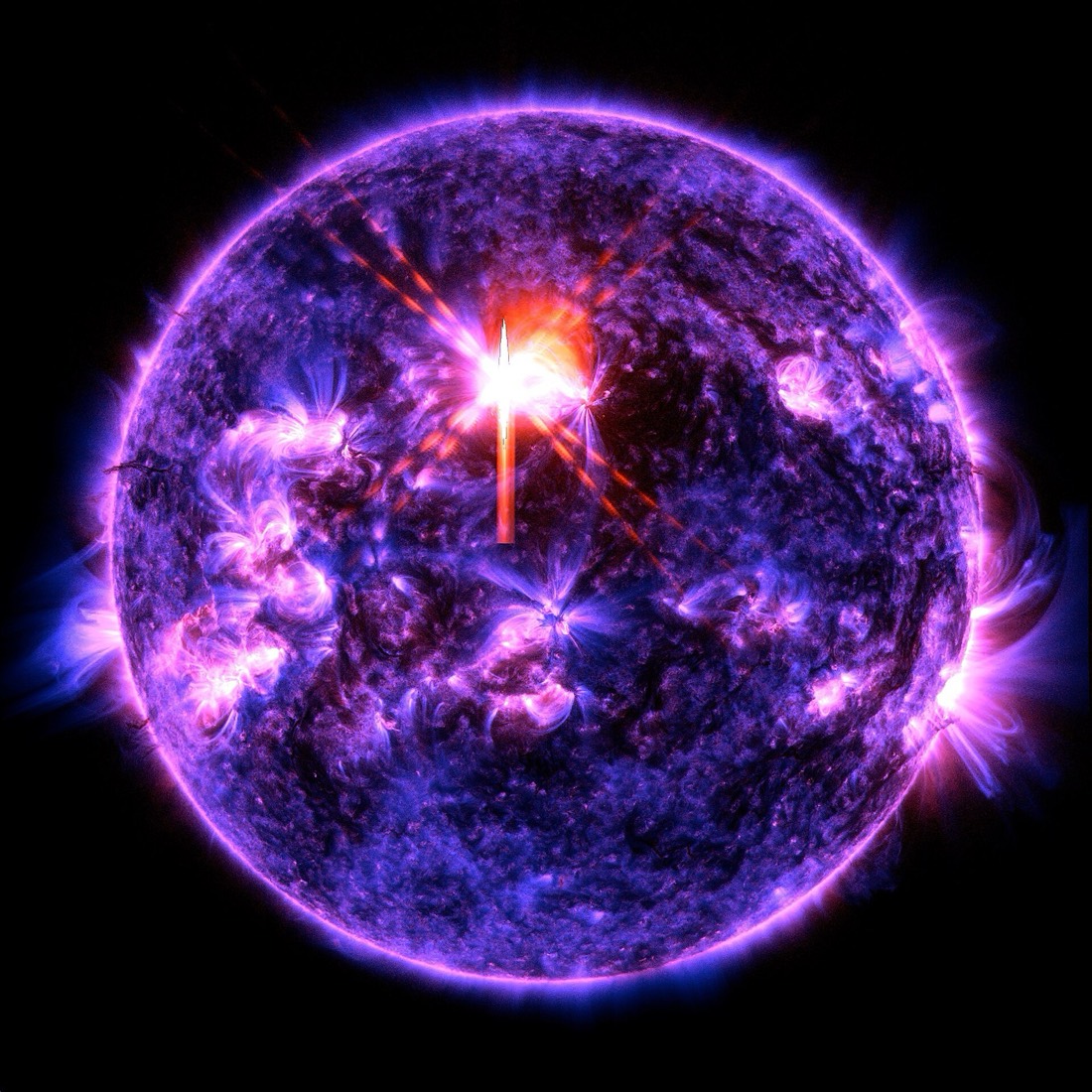
The X4 flare of February 4, 2026, seen by NASA’s Solar Dynamics Observatory. A flare like this can black out daytime HF in seconds. Image: NASA / SDO.
Club checklist: before the big storms
- Antennas: inspect masts, guys and turnbuckles; re-tape connectors; check SWR.
- Grounding: single-point ground panel with arrestors, all rods bonded, and a habit of disconnecting.
- Power: charge and load-test batteries, do the amp-hour math, and plan for 72 hours.
- Simplex: hold a club simplex test night and map who can relay for whom.
- Training: take the SKYWARN spotter class, sign up for ARES, take a turn at net control.
- EOC: review the intake procedure and Winlink, and know two routes in.
- Go-kit: radio, batteries, charger, frequency list and rain gear, kept in the car.
What a license really teaches
Throughout the evening, Dave stopped to point out where the science came from: the Technician exam. It was a reminder of how much ground a new ham covers just to get on the air. Earning a license isn't only learning rules and frequencies. It means learning a little meteorology, a little physics and a fair amount of common sense.
Look at the subjects the night's talk touched, and all of them are on the test. There are the layers of the sky: why the ionosphere bends HF signals home while VHF and UHF mostly stop at the radio horizon, and why that horizon sits a bit past the one we can see. There's the weather we live in: how a temperature inversion builds a duct that carries 2 meters hundreds of miles, and why heavy rain shortens a microwave link but does nothing to 40 meters. There's the sky's odd moments, like the meteor trails that make 6 meters the band for meteor scatter. And there's plain safety and self-reliance: keeping antennas well clear of power lines, grounding a station against lightning, and working out how long a battery will keep a radio going when the power fails.
None of it is trivia. A Technician who passed those questions already knows why the repeater went quiet during the storm, why a distant station showed up the morning after, and what to check before the next front arrives. For anyone preparing for a license or an upgrade, the club runs classes for all three license levels.
Sources
- NOAA Climate Prediction Center, ENSO Diagnostic Discussions of October 8 and November 12, 2026 · cpc.ncep.noaa.gov
- NCVEC 2026–2030 Technician question pool · ncvec.org
- NOAA Space Weather Prediction Center · swpc.noaa.gov
- NWS San Francisco Bay Area (SKYWARN, flood safety) · weather.gov/mtr
- Millbrae flood deaths, December 2021: KTVU, SFist
- San Bruno Mountain elevation: Wikipedia